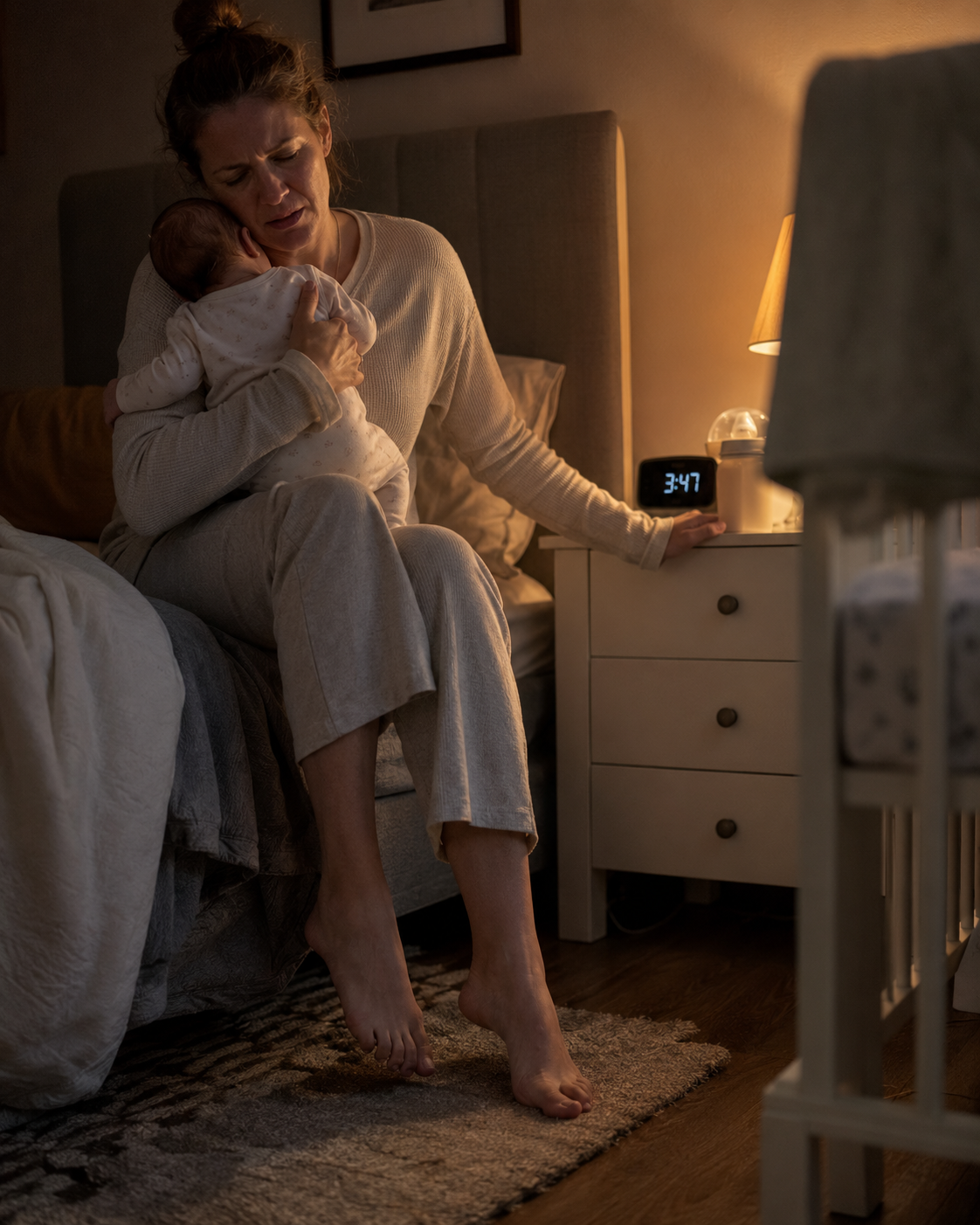
3:47 a.m. The baby is crying again. You swing your legs over the edge of the bed the way you have every night for weeks now, and for one second before your feet touch the floor, you brace. Because you already know what's coming. The first step lands like you've stepped straight onto broken glass — a hot, stabbing pain through your heel that shoots up into your arch. You grab the dresser. You breathe through it, the same way you breathed through contractions, except nobody warned you this part was coming too. By the time you reach the crib, it's dulled to a throb. You pick up your baby. You don't mention it to anyone. You just do it again tomorrow night.
"I Thought I Was The Only One"
At two in the morning, phone light burning her eyes, she typed it into Google for the first time: foot pain after having a baby. Pages of results about weight loss. Nothing about why the bottom of her foot felt like she'd been standing on nails since the day she came home from the hospital.
At her six-week checkup, she finally said something out loud. Her doctor nodded, said it was probably from the extra weight, told her to try to rest more and stay off her feet when she could. She had a five-week-old. Rest wasn't a plan. It wasn't even a sentence that made sense.
"I honestly thought I was the only one with foot pain, and I felt like I was 80 years old getting out of bed every morning." — posted in a new moms' support group
The Thing Nobody Puts On The Discharge Papers
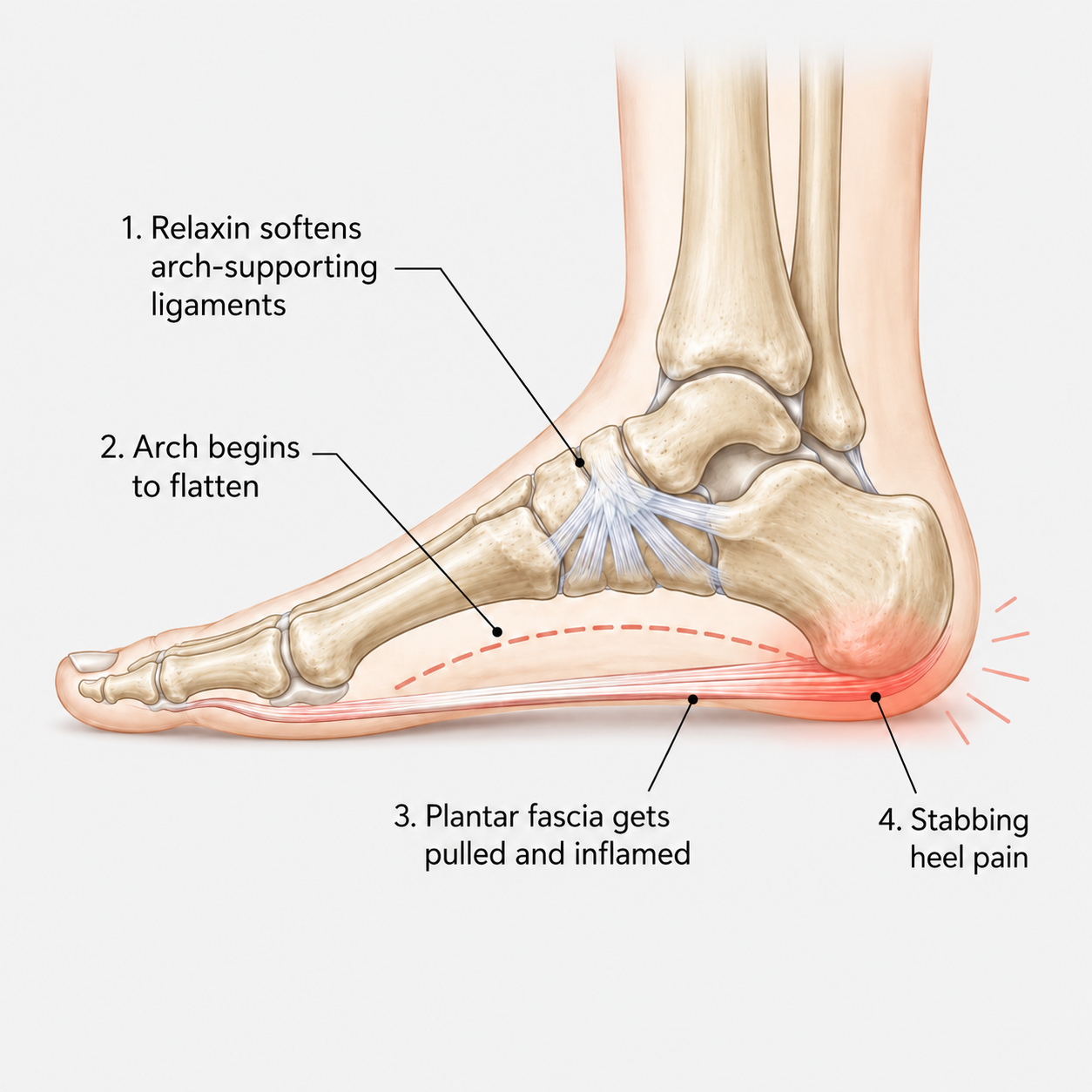
Here's what almost no one tells you before you leave the hospital: pregnancy floods your body with a hormone called relaxin. Its actual job is to loosen the ligaments around your pelvis so your body can make room to deliver your baby. That part, you probably knew.
What most women are never told is that relaxin doesn't stay in your pelvis. It travels through your entire body — including your feet. It softens the exact same ligaments that hold up your arches. Add roughly 25 to 35 pounds of pregnancy weight pressing down for nine months, plus a center of gravity that's shifted forward, and your arches don't just get tired. They stretch. They flatten. And the band of tissue running along the bottom of your foot — your plantar fascia — gets pulled and inflamed with every single step you take.
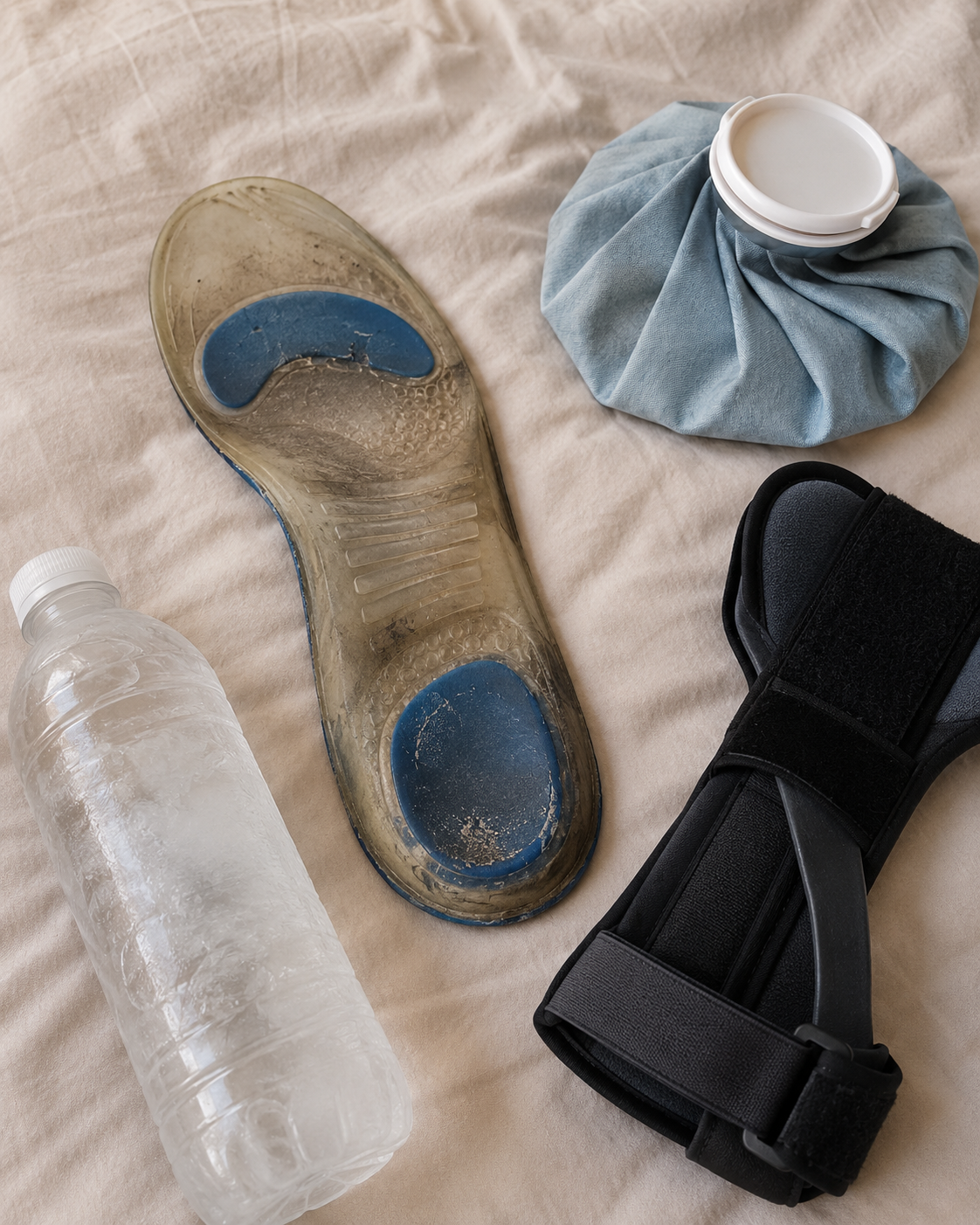
That's the stabbing pain. That's the ache that doesn't fully go away no matter how much you stretch, or ice, or rest.
And here's the part that explains why it's still happening months later, long after you thought your body would've "bounced back": relaxin can stay elevated for as long as you're breastfeeding. Some podiatrists report that arch laxity can persist for three to six months after weaning. You didn't do anything wrong. You didn't let yourself go. Your body did something extraordinary — this is just the part of the aftermath nobody put in a pamphlet.